World Thalassemia Day 2026: Why Early Screening Can Save Future Generations
By Dr. Ritu Thapliyal, Senior Consultant, Internal Medicine, Holy Family Hospital, Delhi
A Powerful Reminder on World Thalassemia Day
Every year on World Thalassemia Day, we are reminded of a silent yet serious health condition affecting thousands of families. In India alone, over 10,000 to 12,000 children are born each year with thalassemia major, even though this condition is largely preventable through timely screening and awareness. This reality highlights one crucial fact: early diagnosis is not just important, it can save lives and future generations.
What is Thalassemia?
Thalassemia is a genetic blood disorder that affects the body’s ability to produce hemoglobin, the protein in red blood cells responsible for carrying oxygen. When hemoglobin production is reduced or abnormal, the body cannot transport oxygen effectively, leading to anemia.
In severe cases, patients rely on regular blood transfusions to maintain normal hemoglobin levels. Because it is inherited, thalassemia is passed from parents to children, making awareness and screening extremely important.
Types of Thalassemia
There are two main types of thalassemia:
- Thalassemia Minor: A mild condition where individuals may not show noticeable symptoms but carry the They can unknowingly pass it on to their children.
- Thalassemia Major: A severe form that appears in early Patients require lifelong treatment, including frequent blood transfusions.
The key difference lies in severity. While minor cases may lead a normal life, major cases require continuous medical care and monitoring.
Common Symptoms to Watch For
Thalassemia symptoms often develop gradually and may vary in severity. Common signs include:
- Persistent fatigue and weakness
- Pale or yellowish skin
- Delayed growth in children
- Frequent infections
- Enlarged spleen
- Bone deformities in severe cases
Recognizing these symptoms early can lead to timely diagnosis and better management.
Why Early Diagnosis Matters
Early detection plays a critical role in managing thalassemia effectively. It helps in:
- Preventing severe complications
- Planning timely treatment
- Creating awareness within families Doctors usually recommend tests such as:
- Complete Blood Count (CBC)
- Hemoglobin electrophoresis
- Genetic testing
These tests help identify both patients and carriers, allowing informed medical and personal decisions.
Treatment Challenges Patients Face
Managing thalassemia is a lifelong process and comes with multiple challenges. Patients with thalassemia major often require frequent blood transfusions, sometimes every few weeks.
Repeated transfusions can lead to iron overload, which may damage vital organs like the heart and liver. To manage this, patients undergo chelation therapy to remove excess iron from the body.
Apart from physical challenges, families also face emotional stress and financial burden, making it essential to provide both medical and social support.
Can Thalassemia Be Prevented?
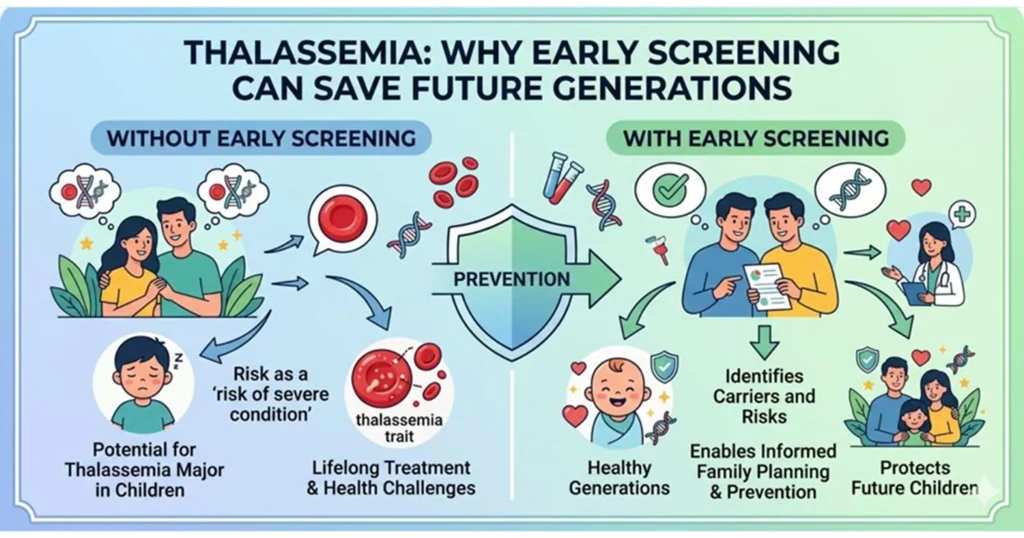
The most encouraging aspect of thalassemia is that it is largely preventable with the right steps:
- Premarital screening to identify carriers
- Carrier testing for individuals with a family history
- Genetic counseling for at-risk couples
- Prenatal testing during pregnancy
These preventive measures can significantly reduce the number of affected births and protect future generations.
Doctor’s Advice: Awareness is Prevention
As a healthcare professional, I strongly emphasize that awareness can save lives. Screening before marriage or pregnancy should become a common practice. Early testing helps families make informed decisions and prevents unnecessary suffering.
Thalassemia is not just a medical condition. It affects families emotionally, financially, and physically. Yet, many cases can be prevented through simple awareness and timely screening.
On this World Thalassemia Day, let us take a pledge to spread awareness, encourage testing, and support those living with thalassemia.
Because sometimes, a simple test today can protect generations tomorrow.